DR. GOLAN BEN-DOR
URBAN MOBILITY SCIENTIST
SIMULATING
THE FUTURE
I work with transport agencies to evaluate major projects under uncertainty, using real-world data, agent-based models, AI and scenario analysis.
Current collaborations include the Ministry of Transport's Strategic Planning and Innovation Division, Netivei Ayalon, Netivei Israel, the Jerusalem Master Transportation Team, and the Central Bureau of Statistics (CBS).

TRUSTED BY AND COLLABORATING WITH INDUSTRY LEADERS




About Me
The Architect of Flow
With a PhD from Tel Aviv University, I bridge the gap between theoretical algorithms and concrete urban reality. My work focuses on Robust Policy Evaluation—ensuring that billion-dollar decisions handle uncertainty.
Technical Arsenal
Core technologies used for simulation & analysis:
PhD Research
"Combatting Congestion: Robust Transportation Policy Evaluation"
Selected Work
Google Maps Analytics
Strategic planning for the Ministry of Transport. Harnessing massive API datasets to visualize real-time congestion and optimize traffic count distribution.
Role: Method Lead, Technical Advisor, Co-PI
Budget Responsibility: Lead project up to 15 million (Google Project).
Jerusalem Master Plan
Secured $400k budget to develop a city-wide Agent-Based Model simulating future shared transport and automated vehicle scenarios.
View Simulation →Blind Control Reconstruction
Rigorous "blind" reconstruction of the Beer Sheva traffic model results to validate the integrity and accuracy of the simulation for government approval.
View Methodology →AI-Enhanced Workflows
Pioneering AI-Native Development using Claude, Gemini, and Codex to accelerate simulation pipelines and automate complex spatial SQL queries.
Learn More →Knowledge Hub
AI in Urban Transport
Featured on National News discussing the future of autonomous traffic flow.
Robust Policy Evaluation
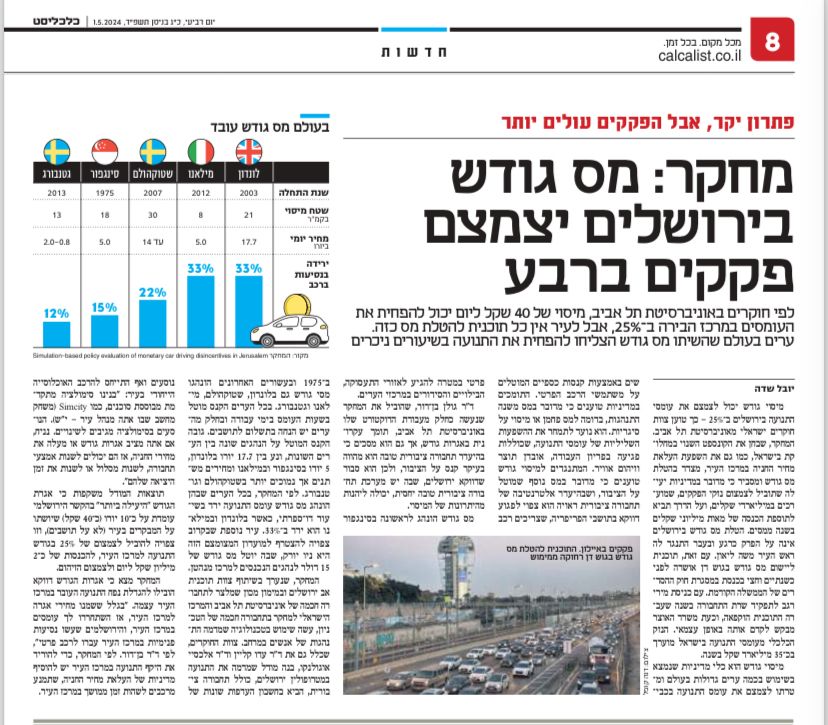
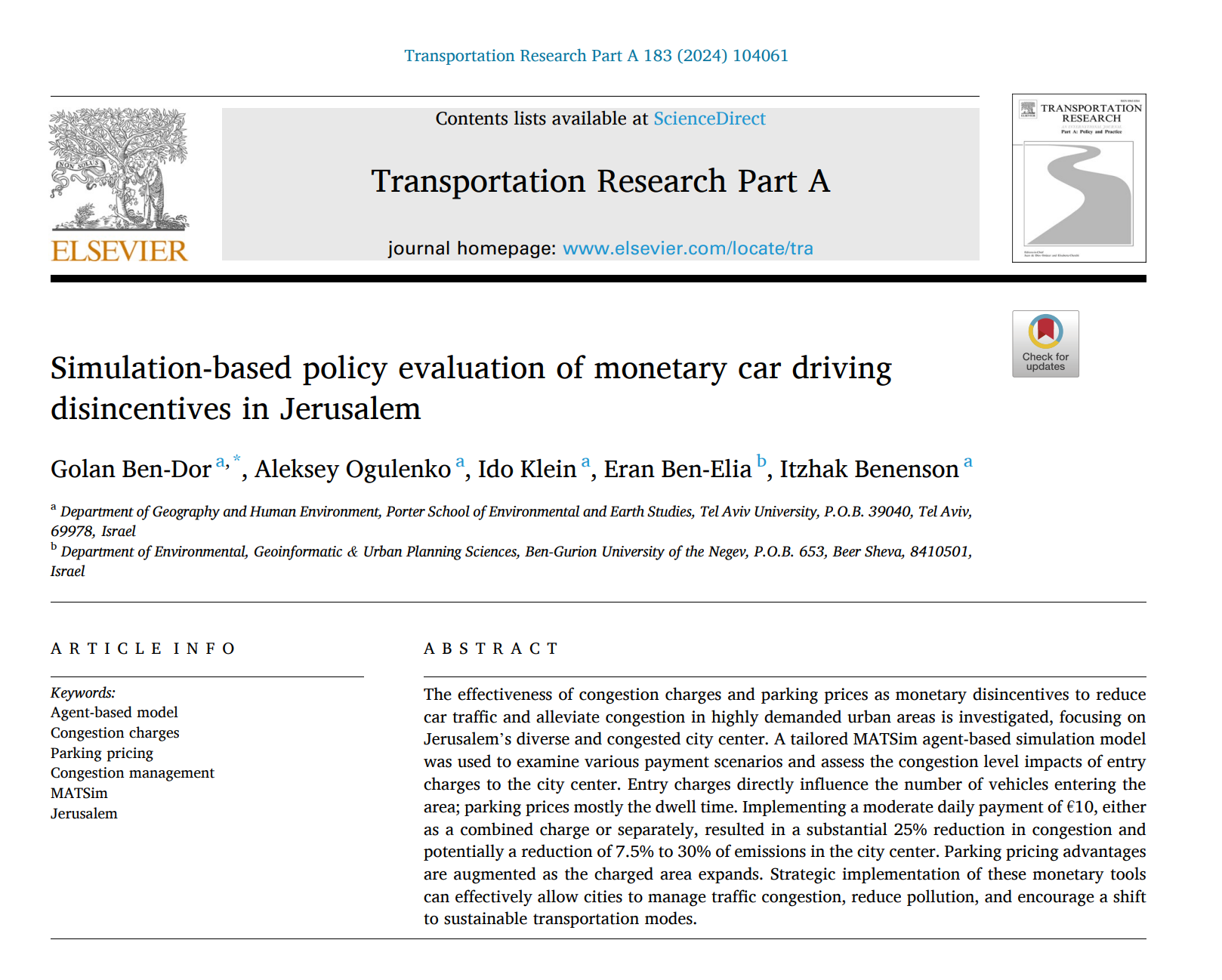
Agent-based evaluation of congestion charges and parking prices in central Jerusalem. MATSim scenarios show how fees reduce congestion and emissions and encourage travelers to switch from private cars.
Agent-Based Modeling at Scale
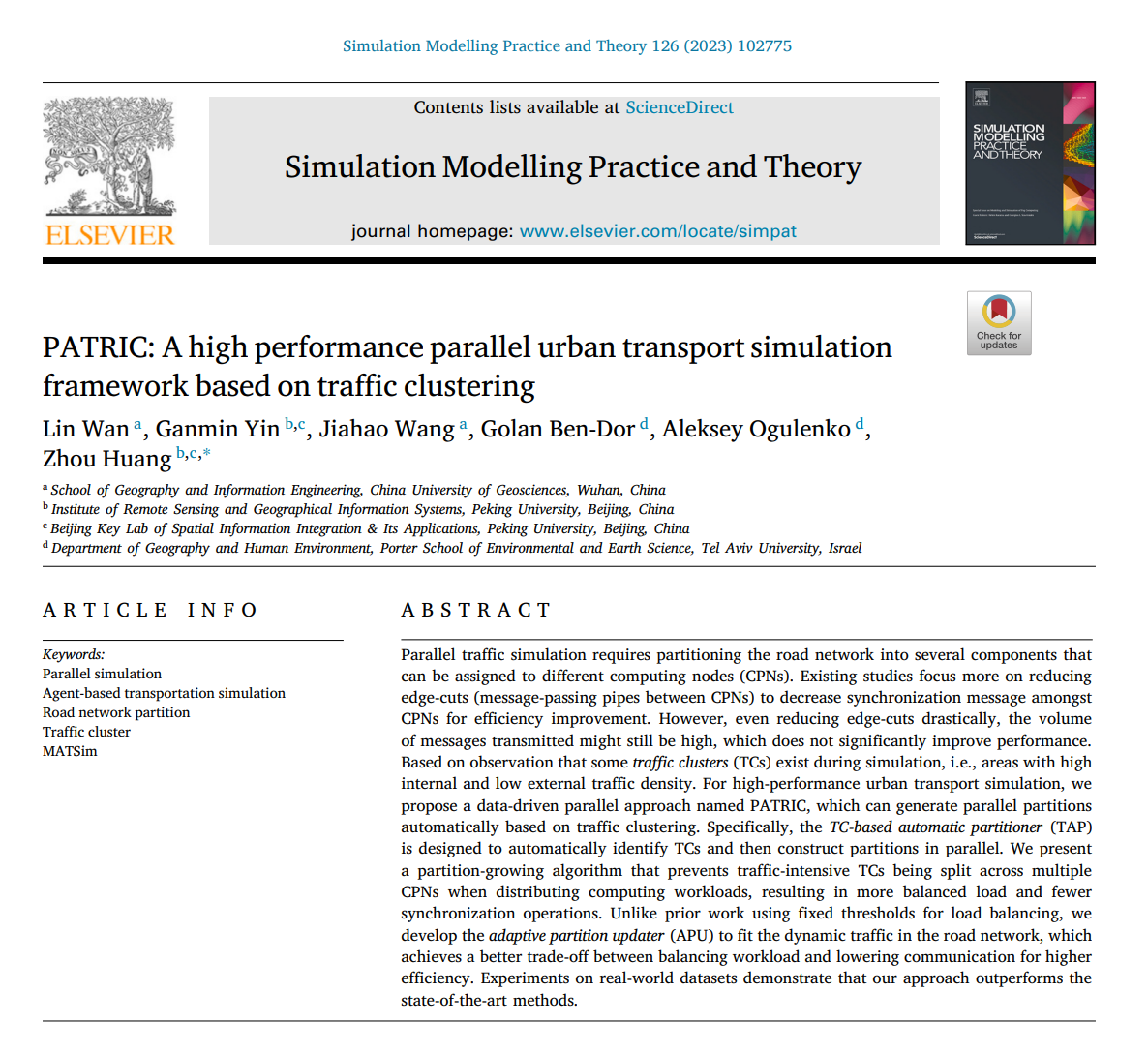
Parallel framework for large-scale urban traffic simulation in MATSim. Automatically clusters traffic to partition the network, balance cores, and reduce synchronization, delivering faster simulations on real road networks.
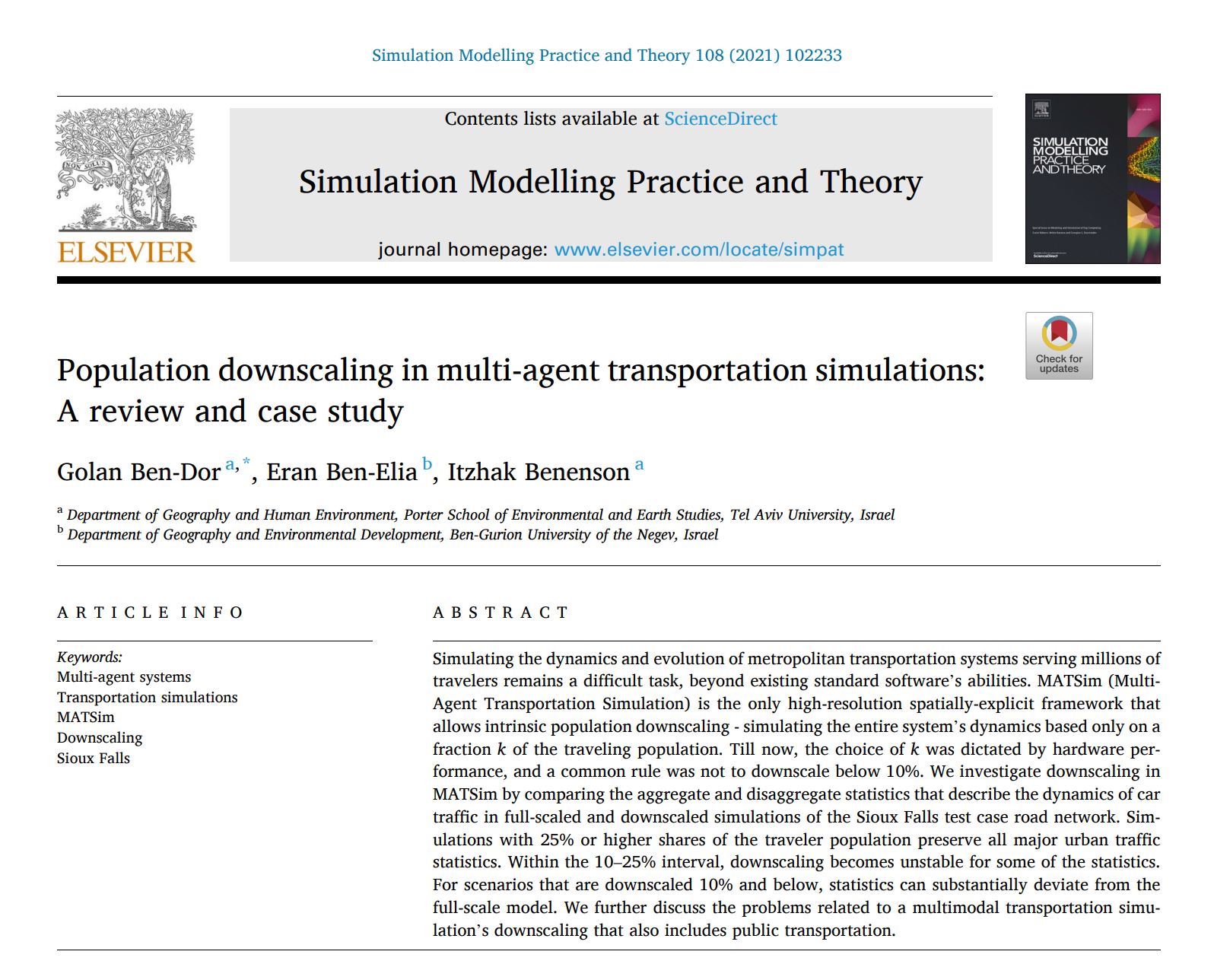
Population Downscaling in MATSim
Studies MATSim downscaling by comparing full and sampled populations in Sioux Falls. Shows which reduced agent shares preserve key traffic statistics and where further scaling distorts network dynamics.
LET'S CONNECT
Open to consulting on national and metropolitan models, data infrastructure for mobility analytics, and research collaborations.
golanbendor@gmail.com